Thursday, November 11, 2021

More than a minute's silence.

 Honour the sacrifice by flourishing in your life - a HALF PRICE OFFER to help!

Do you do anything to mark Remembrance Day?


I often forget to pause for the minute's silence at 11.11am on the 11th of November - the anniversary of the end of WWI. But I sometimes think about the people whose lives were taken in wars and feel a dull, heavy darkness inside. 


I don't know what war's like. I've never even been close to one. I know it only through movies, history lessons, and my walking tour of Gallipoli in Turkey many years ago.


In my imagination I see myself in some of those movie scenes, playing my part to defeat the evil forces trying to rob me of my freedom. Of course, war isn't always that simple. The agendas driving them are often more numerous and less honorable than defending freedom. 


What IS clear is that monumental amounts of suffering have been endured by people (and other beings) in wars. And most of these beings would have participated either because they had no choice, or because, at least in their intentions, they were fighting for our right to live free and happy lives


In Australia, we're pretty darned close to this outcome. It's not perfect. The way the British went about settlingthis country was essentially a war, it's just that the other side had vastly inferior weapons. We're still trying to figure out how to heal the aftermath of that with our indigenous people 230 years later. We have other tough issues to solve too, like domestic violence.


But most Australians alive today have few societal barriers to living peaceful lives. We have food, shelter, free education and health care, an abundance of natural beauty to enjoy, and a relatively safe and harmonious society. In some ways, you could say we have the fruits of those war-time sacrifices.


And yet here we are, more miserable than ever! Anxiety and depression are at all-time highs. Even before the pandemic, one in ten Australian adults were taking an anti-depressant every day and this has gotten worse with COVID, especially among young people who have been presenting at emergency wards with self-harm at alarming rates. Much of the Western world is seeing similar trends.


In my view, pausing for a minute once a year to remember the sacrifices people have made for our freedom is pretty light-on. To truly honor those sacrifices, shouldn't we get serious about making the most of our lives? Shouldn't we do whatever it takes to flourish as human beings now that we have peaceful-enough societies to do that? 


A comfortable, safe life is not the endgoal. It's the launch-pad for a rich, fulfilling life! And guess what? Flourishing in life is what the Buddha was on about too.


Ironically, our ancestors' struggles to get us here gave them some elements of fulfillment that peaceful times don't.


We're wired to engage our talents towards goals - in a way, to struggle. They certainly had to do that!


We're also wired for belonging - wartime gives you that too - a clear sense of belonging to a tribe.


And we also thrive by contributing to causes outside of our own benefit - fighting for my country gives us that.


I suspect the lack of these things would partly explain why some people are attracted to us-and-them ideological groups nowadays.


One powerful and meaningful way to honor the sacrifices made by the countless beings before us, is to commit to really flourishing in our lives. Not just getting by, not just being comfortable or safe, but truly making the most of this rare opportunity we have in the history of humanity, to decide how to live life.


Of course the question then arises....how do I do that? No-one teaches us this! Well, that's in fact what all our efforts with Flourish Personal Growth are about and we have a super-powerful tool called the Flourish Life Assessment to get you going.


I'm going to use this very poignant opportunity to encourage you to act on this. For the next THREE DAYS I'm going to give it to you for HALF PRICE, simply enter the code 50%OFFFLA at checkout! 


This 43 page workbook starts with some powerful reflections on your life starting right where you are now. It then leads you through a self assessment on the Nine Needs for full human flourishing and the Five Growth Superpowers that are needed to make meaningful changes in your life. And finally, it walks you through mindful reflection and planning based on what you find. 


Figuring out how to flourish can take decades - I know, I've been doing it for decades! But the reason I'm building Flourish is so that you don't have to take that long. Our tools are based on modern research, the Buddha's wisdom, and practical experience - they actually work! They give you the shortcut to development that actually leads to flourishing.


Committing to the adventure of living a rich and fulfilling life, not just a safe and comfortable one is, in my view, the most powerful way to honor the striving and sacrifice of those who've gone before us. It also has ripple effects on the lives of those around you. In some ways, it's the most kind and loving thing you can do for everyone!


My offer is only on until midnight Sunday night, so that you don't delay and then never get around to it. Here it is again. Will you take this step to make the most of this brief and precious life you have?


Lenorë


Thursday, November 4, 2021

The Stress Spike and how to shift back into the Flourishing Zone.


In one of the Buddha's important teachings, the Satipatthana Sutta, he described Dharma practice as mindfulness of whatever's going on. It's not just sitting on a cushion meditating, it's mindfulness, no matter what we're doing. This includes, importantly, the state of our body-mind. This sutta is so important it's been called his Lion's Roar.


In my last two posts I've talked about the two common neural zones we find ourselves in: the Fight/Flight Zone, and the Flourishing Zone. (The third is the Freeze Zone where we shut down due to an imminent threat to our life - not so common.) It's the Fight/Flight Zone where we tend to react unskillfully and damage ourselves, others, and our relationships.


In my last post I spoke about how to notice which Zone you're currently in. But if you notice you're in the Fight/Flight Zone, what can you do? I want to share some tactics for shifting out of there and back into the Flourishing Zone.


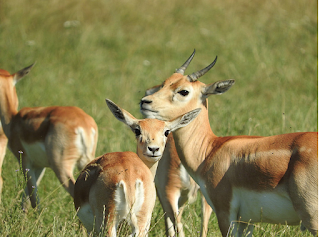
When a gazelle sees a lion, it's nervous system flips into the Fight/Flight Zone. A spike in stress hormones fires it up for emergency action and it flees to safety. If successful, within minutes it's back to grazing calmly.


Us humans, we're not so good at returning to grazing. We need to learn how to soothe the body-mind after a stress-spike.


Let's say our 'lion' (perceived threat) is our boss speaking to us in an unhappy tone. We've been practising mindfulness and we can feel our body gearing up for faux-emergency action. We feel tense and our mind has narrowed to focusing on the threat. We know we're in the Fight/Flight Zone.


We also know this is not a helpful place to be (see the two previous posts here and here). Neither fighting (giving our boss a mouthful), nor fleeing the situation (storming off) are going to help. But how do we recover from this process of firing up? How do we deal with the spike of stress hormones that are coursing through our bodies as if there was some life-threatening emergency? How do we self-soothe and shift back into the Flourishing Zone where we have access to our skill, reason and creativity?


I'm going to offer you some practical tactics. But first, we need to understand the stress spike. It's a bunch of hormones being released into your body. These hormones may only be acute for a few minutes, but they stay present for a few hours (or more if we ruminate on the stressful event, which then injects more of them).


If we have another stressful event during this time, we're already primed to see and respond to threats - primed to overreact. So we go into that next meeting and we're more likely to interpret our colleagues' comments as threatening and react, and less likely to see things as they are and respond skillfully. (Making long-term decisions in this state is not a good idea.)


Edginess is also more present early in the morning when cortisol levels (one of the key hormones) are at their highest - from around 6-8am.


When we're under the influence of a stress spike, we need to be vigilant with our responses, to take extra care with ourselves, and engage self-soothing tactics.


Here are seven effective tactics for when our bodies are fired up for a faux-emergency.


1. Act like a block of wood - the first thing to do is....nothing! Think: block of wood sitting on the ground, going nowhere, still as a post. You're more likely to be reactive rather than intelligent if you act now. So the first step is just to be that block of wood and not make the situation worse, until you can self-soothe your way out of the spike. Here's how...


2. Breathe out slowly - when we breathe out, we trigger our parasympathetic nervous system. That's the 'rest and digest' mode of grazing gazelles. Do something that requires a long out-breath. That could be 7/11 breathing, where you count to 7 on the in-breath and 11 on the out-breath. It could be singing, playing a wind instrument, whistling, anything that requires you to make that out-breath nice and l - o - n - g.


3. Exercise - cortisol is the main trouble maker when it comes to prolonged stress. The fastest way for the body to process cortisol is exercise. The worst thing you can do is skip that run/ cycle/ swim/ gym class.


4. Distract yourself - engage in an activity that requires you to think. This stops us from re-living the stressful event in our minds, producing more spikes.


5. Physical touch - the touch of another being is soothing. Whether it's human hugs, dog hugs, big soft teddy-bear hugs, massage, playing the invisible writing game (where someone traces out words on your back and you have to identify them), or other forms of touch, it's a great self-soother. (Skip this one if touch has fearful associations for you.)


6. Communicate the state - if we are aware that we've had several stress spikes in a short time, we know we're likely to react to things. If you're having to interact with people during this time, let them know you've had a few stressful things happen and you're a bit wired at the moment. They can cut you a bit of slack and not take your edginess the wrong way.


7. Seek empathy - share your stressful situation with someone who's a good listener - someone who can empathise without needing to fix things. True empathy is gold.


These are all short-term fixes to finding yourself in the Fight/Flight Zone. There are also longer-term tactics to help keep you from straying there in the first place (more on that to come). But we can only access those when we're in the Flourishing Zone. So more immediate tactics are needed first.


What have you found helps shift you out of the Fight/Flight Zone? Leave us a comment here.


Chat soon.

Lenorë

Friday, October 15, 2021

Know Thy Zone


In my last post I described three zones of our nervous system: the Freeze Zone, the Fight-Flight Zone, and the Flourishing Zone. In the Freeze Zone we go into shutdown and in the Fight-Flight Zone we go into defense, attack, or escape. Neither of these zones are happy places. They are about surviving, not thriving.


The third zone is what I'm calling the Flourishing Zone (psychologists call it the Social Engagement or Social Communication System). This is where happiness, resilience, and fulfillment are available to us. It's also where learning becomes possible, as well as creativity, presence, self awareness, groundedness, rationality and connection. So how do we know which Zone we're in?


Ask yourself this: 


When I'm feeling an emotion, how do I know that I'm feeling it?


Let's take anger as an example. How do you know that you're feeling angry? Try and answer this question yourself before reading on.


The answer is largely in our bodies. We know an emotion is present because of the sensations in our bodies. When you feel tense, how do you know? Your muscles might tighten, perhaps your heart rate increases, your breathing becomes shallow, there might be jitters in your stomach, your posture might stiffen.


If you rely heavily on your mind for your work (and you haven't developed a mindfulness practice), there's a good chance you could be out of touch with your body. Even if you are physically active, that doesn't mean you have good body awareness. Many people in our modern societies dwell exclusively in their heads - they are numb from the neck down. We see our minds as the primary tool of our success and forget that they are embodied.


Our minds are incredibly important to our flourishing, but they are only half the machinery of our experience. It's much more likely you are out of practice listening to the other half - your body. Yet the body is an incredibly reliable indicator and informant about your current experience.


Here are some questions you can ask yourself to start tuning in to which (neural) Zone you are in. This practice starts in the most familiar place - our minds - and works from there. You can ask these questions anywhere, any time during the day. Give yourself a good few minutes to start with but your mindfulness muscle will get faster the more it's used. (It's helpful to close your eyes while trying to answer these questions, as our visual field takes up a lot of our attentional capacity.)


The practice is simply to describe what's going on for you in three areas:


MIND: What mind activity is present? Is there problem solving? Are there mental movies playing about some imagined future scene or one from the past? Is there planning? Remembering? Storytelling?


EMOTIONS: What feelings are present? Are they generally pleasant, unpleasant or neither? There could be more than one. Ask yourself this question and then just wait to see what answers arise. Ask if there's anything else. Give it time. If the answer is close but not quite right, just ask the question again, and wait. (If you'd like some help identifying feelings, try our free Tool: What Am I Feeling? )


BODY: What body sensations are here? Is there tightness or holding anywhere? If so, where? Is there heat or cold? Is there movement? If so, what kind? Is it rhythmic, or jittery or something else? If you feel energy somewhere, what does that feel like? Describe it to yourself.


Memorise the three areas of focus: mind, emotions, body, and practice describing what's happening whenever you can. If you are doing this, you're unlikely to be in the Freeze Zone, so practice identifying whether you are in the Fight/Flight Zone, or in the Flourishing Zone, based on the descriptions in my last post here


The more quickly you can notice which zone you're in, the less likely you are to make a mess of things out of reactivity - to harm yourself, your relationships, and others. 


If you find you're in the Fight/Flight zone, your first job is to wheel in a bucket of compassion. It's painful to be in this zone! And it's very human.


The second job is to act on that compassion by self-soothing - go for a run, have a hug, talk with a friend - figure out what works for you and do it.


Once you've soothed yourself out of the Fight/Flight zone, then you're able to learn from the situation and we've got some Tools to help....


I invite you to practice this over the next week.  Notice when the body-mind is in the Fight/Flight Zone, apply compassion, self-soothe, then look for learning. 


Chat soon.

Lenorë

The Flourishing Zone


I talk a lot about the Nine Needs for full human flourishing. These are the nine ingredients we need for a fulfilling and not-too-stressed life. (Many of you assessed yourself on these a few weeks ago.)


But what about flourishing in the day-to-day? It's great to pay attention to the big picture to make sure each of the ingredients is there at a whole-of-life level, but what about the experience of any given day? What about your experience right now?


Let me introduce you to the idea of the Flourishing Zone. That is, paying attention to and managing the state we are in right now.


You know about fight and flight right? These are responses to feeling threatened - responses from the sympathetic branch of our autonomic nervous system. They are our survival modes. When we are in them, we are surviving, not thriving. If we haven't paid attention to our Nine Needs, we'll probably find ourselves in these modes more than necessary.


However a couple of decades ago, there was a profound development in the understanding of survival modes as the role of the vagus nerve came to light. This nerve plays a role in the shut-down that happens when we freeze in response to a perceived threat (usually to our life). This research showed that the autonomic nervous system in fact has three branches, not two:


1) freeze

2) fight/flight

3) social engagement


Freeze

If we feel a serious imminent threat (e.g. to our life), we go into shutdown - into under-arousal - the freeze responses. Here we are unable to think, talk, maybe even to move, we can feel spaced out or even faint, withdrawn, depressed, numb, unable to respond. This response comes from the oldest and deepest part of our brain: the reptilian brain.


Fight/Flight

If we perceive danger, we go into the fight/flight responses - over-arousal. Here we feel tension, maybe anger, anxiety, frustration or defensiveness. We might have emotional outbursts or become rigid and inflexible, subversive, manipulative, aggressive, harsh or controlling. Or our patterns could be in the opposite direction - avoidance, or playing the victim. 


This is also the territory of self destructive behaviour, addictions, obsessions and phobias. Our body-minds are tense, on edge, reactive.


While those responses might sound extreme, we can have minor versions of them multiple times a day. The trigger could be getting stuck in traffic, a critical tone of voice from a work colleague or friend, or being excluded from a group somehow. Many of our modern day fight/flight responses are triggered by social danger rather than physical danger because for the most part, we are physically safe. But in our DNA, belonging is linked to survival.


Social Engagement

When we are feeling safe, we move into social engagement responses. This is the zone where flourishing occurs. It's where we connect with others and have access to our full range of capabilities and personal resources, including the ability to learn.


It's also where our bodies' visceral healing processes occur - the 'rest and digest' functions of the sympathetic branch of the autonomic nervous system. (This is especially important for recovery if you're an athlete.) We are out of survival mode and into flourishing mode.


All of our 'new-brain' capabilities of language, rationality and creativity are at our disposal. Our new brain is the neo-cortex - the outer layer that is distinct in humans, and most of it is involved in processing social cues.


Here our bodies are calmer, we might feel energy, joy, delight, warmth towards others, patience, curiosity, and our bodies are more at ease. We're able to learn.


In the last 20 years or so, another survival response has been identified - the 'tend and befriend' response. Historically observed more frequently in women (although this may be changing), it involves building reciprocal helpful relationships with others, which become beneficial when under threat. The building of these relationships can only happen in the flourishing zone of social engagement.


The good news is that we can increase the amount of time we spend in the flourishing zone. To do that though, we first need to be aware of which zone we're in. And for that, we need to practice mindfulness. I posted recently on the role of mindfulness in personal growth and this is a case in point. 


In my next email, we'll look at how to identify which Zone you're in.


Chat soon.

Lenorë


P.S. If you'd like to assess yourself on the Nine Needs for full human flourishing as well as the Five Growth Superpowers, and grow your way to an awesome life, try our Flourish Life Assessment.)

What did lockdown show you?


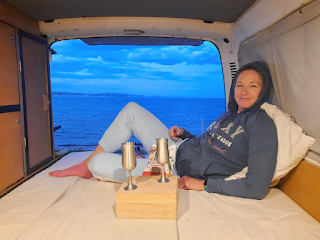
This is us celebrating the last weekend of a COVID-19 lockdown here that lasted 107 days. Yep, our idea of lockdown fun - champagne in the back of the van overlooking the ocean.

You know the lockdown experience, whether you were part of this one or not. So what did you learn about yourself? Many of you downloaded the Nine Needs Self-assessment the other week - which Needs did you find were lacking?

One of the Five Growth Superpowers is Commitment to Growth and that involves looking for learning from every experience. I learnt a bunch of things, but let me share three big ones.

1. Adventures are an important way I meet the Need for Pleasure. For ages now, we haven't been able to plan anything. Our international borders have been closed, our state borders have been closed, hell for the last three months we haven't even been allowed to leave our local council area.

Some of my pleasure sources were always obvious - for example massage services also stopped during the lockdown. But I learnt just how much joy I get from dreaming up, planning and going on adventures. Without them, life felt small - a bit like it was asleep.

Knowing lockdown was a drain on my Need for pleasure, I focused on what I could. I put scented reeds in the bathroom. I put more focus on the simple things like boiling a billy in the van at the beach with Matt. I relished my time training at the track. And because I know learning and novelty are big sources of pleasure for me, I found something new to learn .....I took up pole vault! (As you can see, I still have lots to learn!)


2. It's important to have local friends and regular catch-ups. We know the Need for Connection is vital for us humans, and I did my best to keep that alive by arranging Friday video-drinks with friends each week. That was terrific and it's something we'll keep doing.

But video catch-ups alone aren't enough. A member of my meditation group had just moved to a new suburb (on her own!) before the lockdown. She didn't know anyone in her new area, so she wasn't able to catch up with friends in person. She really struggled with this.

I remember (decades ago) in my Social Psychology class, learning that physical proximity is a big predictor of who is in your social network. Because we've been living here for a long time, I've made some good friends in my local area. During lockdown we were allowed to exercise with one other person. I have two good friends with whom I catch up regularly and we kept this up during lockdown. This was super-helpful for me! I live with my best friend (my husband), so how much more important is it for those who don't?

There's something really beneficial about having regular meetings with friends - catch-ups that don't need to be planned. That way, your default setting for weekly life contains friendship - connection - rather than the default setting being isolation.

In our modern lives it's also common to move house - move suburbs, cities, states, or even countries. This can really disrupt our network of Connection. So if we do it, we need to treat building a new local web of Connection as an important priority - an important project.

3. Limbo is only mildly unpleasant - what we do with it can make it suck! Another of the Five Growth Superpowers is Curiosity. Part of my personal growth practice during the lockdown was to bring this attitude to the experience.

For a long time, we we didn't know when the lockdown was going to end. This put us in a kind of limbo, floating in uncertainty. Certainty is another one of our Nine Human Needs - uncertainty makes us feel unsafe, so it's ripe territory for making a mess of things. By 'making a mess' I mean reacting to an unpleasant experience making it worse, rather than mindfully bringing curiosity to it and responding in a skillful way.

What I noticed was that the unpleasant feelings of limbo were actually a mild form of anxiety or restlessness. If I allowed those feelings to be there and didn't react to them, they'd pass. Next thing I'd know, I was enjoying the smell of the fresh laundry I was folding, or in flow doing a hurdles training session, or sitting down to a yummy home-made dinner. I could enjoy all of these things even with a mild anxiety lurking in the background.

It was really only when I started thinking about the fact that I couldn't plan ahead, and I didn't know when things were going to open up again, that the anxiety came to the foreground. When I allowed the mind to go there it was like pouring fuel on a fire.

So increasingly, when I noticed the mind starting to moan on about being in limbo, I'd just notice that, acknowledge to myself that there was an unpleasantness in it, and allow the mind to move on...which it naturally did if I let it!

Personal growth is a commitment to bring curiosity, courage, compassion and clarity to our experience - the whole kit and caboodle!

What did you learn about your patterns of experience from lockdown?

P.S. To assess yourself on the Nine Needs for full human flourishing, as well as the Five Growth Superpowers and plan an awesome fulfilling future for yourself, check out the Flourish Life Assessment here.